

Contact us
Nanwangzhuang Village, Pengdu Township, Binhu New District, Hengshui, Hebei Province

Bridge expansion joint


- 产品描述
-
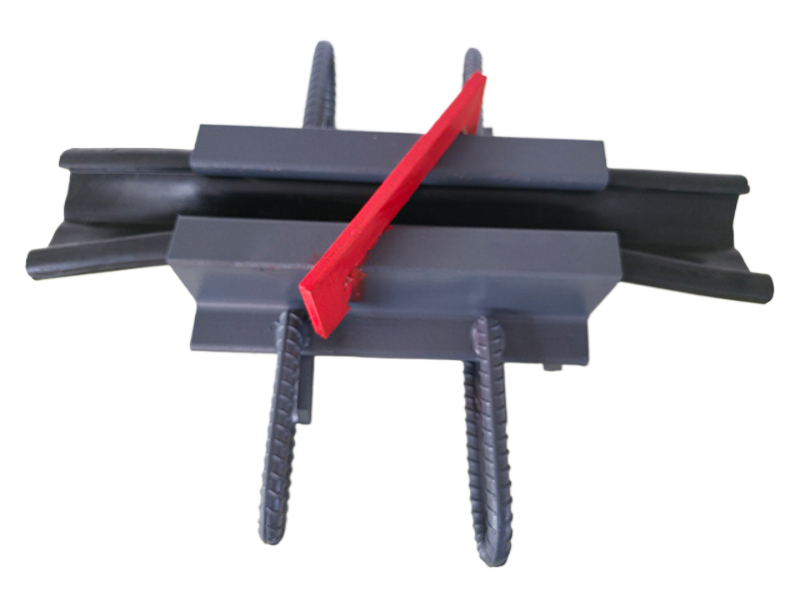
Structure of the Expansion Joint
Modular bridge expansion joints, including GQF-C, GQF-Z, GQF-L, GQF-F, and GQF-MZL types, are designed using hot-rolled, integrally formed special-shaped steel. GQF-C, GQF-Z, GQF-F, and GQF-L expansion joints are suitable for bridge joints with expansion amounts of 80mm or less. The GQF-MZL expansion joint, composed of side beams, center beams, cross beams, and a linkage mechanism, is a modular bridge expansion joint suitable for medium and large span bridges with expansion amounts of 80mm to 1200mm.
Designation Method and Meaning
The designation method is consistent with the representation method in the People's Republic of China's industry standard for highway bridges, JT/T327-2004.
Rubber Types: -NR Natural Rubber; CR Chloroprene Rubber; EPDM Ethylene Propylene Diene Monomer Rubber.
Expansion Joint Displacement - 0~1200.
Model Designation - MZL indicates modular, straight beam linkage chain type; (C, Z, F, L) indicates the shape of the special-shaped steel.
Standard Designation - GOF is the expansion joint designation specified in the transportation industry standard.
Example 1: GQF-C60(CR) represents a C-type expansion joint with a 60mm expansion amount and chloroprene rubber, recommended by the transportation industry standard.
Example 2: GQF-F80(NR) represents an F-type expansion joint with an 80mm expansion amount and natural rubber, recommended by the transportation industry standard.
Example 3: GQF-MZL480(NR) represents an MZL-type modular expansion joint with a 480mm expansion amount and natural rubber, recommended by the transportation industry standard.
Design and Manufacturing Technical Conditions
(1) Design Load: Designed using the vehicle overload-20 load specified in JT/T-88(1995) "Technical Standards for Highway Engineering".
(2) Material of Special-Shaped Steel Used in This Structure: When the temperature is between -25℃ and 60℃, steel with a strength no lower than Q345C is used; when the temperature is between -40℃ and 60℃, steel with a strength no lower than Q345D is used.
(3) The supporting cross beams in the structure use Q235C or Q235D steel strength.
(4) Other steel fittings can use steel with a strength no lower than Q235.
Applicable Range of Rubber Materials
(1) Expansion joints using chloroprene rubber (CR) are suitable for regions with temperatures between -25℃ and +60℃.
(2) Expansion joints using natural rubber (NR) and EPDM rubber are suitable for regions with temperatures between -40℃ and +60℃.
Structural Features
The outstanding feature of the GQF-MZL expansion joint is that the load-bearing structure and displacement control system are separated. They do not interfere with each other when subjected to force, with clear division of labor. This ensures both safety under stress and uniform displacement.
Determination of Expansion Joint Expansion Amount
The calculated bridge expansion amount directly affects the selection of expansion joint Specification. If the expansion joint Specification is not selected reasonably, it will directly affect the use effect of the expansion joint. When selecting the expansion joint, the gap between the beams and plates should also be considered to ensure that the expansion joint is fully anchored at both ends of the beams and plates to achieve the best use effect. Therefore, when selecting the Specification of the expansion joint, sufficient allowance must be left to ensure the use effect and durability of the expansion joint.
After selecting our company's expansion joints, bridge construction units should provide the following information for easy processing and manufacturing:
(1) Cross-section drawings of the bridge (including the position and Size of the cross slope, sidewalks, safety belts, and railings).
(2) Construction time of the expansion joint and temperature variation range during installation.
(3) Special requirements of the user should be clearly stated.
Note: If the user does not provide the positioning value, our company will uniformly position it at the factory according to 1/2 of the rated maximum expansion amount of the product.
Transportation and Storage of Expansion Joints
1. Transportation
After the expansion joint is completely assembled according to the design requirements, it is transported to the construction site by the Manufacturer or the user. If its length exceeds the transportation limit or cannot be transported as a whole due to other reasons, a segmented manufacturing method can be used.
2. Storage
After the expansion joint arrives at the construction site, its storage location should be as close to the installation location as possible, and it should be placed on supports at least 30cm above the ground and protected in time to prevent bumps, falls, rain, snow, or corrosion.
Bridge Expansion Joint Installation Process
The quality of the construction and installation of the expansion joint is the key link to ensuring the use effect and service life of the expansion joint. In order to ensure the installation quality of the expansion joint and fully utilize the design performance of the expansion joint, our company has formulated the following process in reference to the Ministry of Transport (IT/T327-2004) standard. Construction units are requested to strictly follow this process during installation.
Installation Principles:
★To ensure the smoothness and consistency of the expansion joint with the bridge deck, it is recommended that the expansion joint be installed after the bridge deck paving is completed.
★For modular bridge expansion joints, the anchoring structure is welded anchor bars on the steel (side beams). Although the structural forms of the anchor bars are diverse, the purpose is to reliably anchor the expansion joint to the beam or bridge pier. Therefore, the key to installing the expansion joint is to connect the embedded bars with the anchor bars using transverse bars or auxiliary bars (lapped short steel bars). That is, spot welding is used to secure the intersection of the transverse bars, embedded bars, and anchor bars, or the lapped joints of the auxiliary bars (lapped short steel bars), embedded bars, and anchor bars.
Clean the Reserved Slot:
★Find the center line of the gap between the beams, and correctly mark and cut the seams according to the design requirements.
Clean the backfill in the reserved slot, adjust the slot gap to the design size, roughen the concrete and clean the slot.
Organize the embedded steel bars to accommodate the lifting of the expansion joint.
If there are too few embedded steel bars, steel bars must be implanted. Pavement layer steel bars or lifting beam steel bars can also be used to replace the embedded bars.
Weld and level the positioning channel steel.
Calculate the required number of channel steels, placing one channel steel at intervals of approximately two meters.
Cut the channel steel (No. 10-12) to a length exceeding the slot width by 1000mm.
Place the channel steel flat on the top surface of the shaped steel, and weld and fix it to the side of the shaped steel with short steel bars.
If channel steel is not available on site, I-beams can be used instead, but a flat surface must be ensured.
Lifting and Adjustment
If the on-site gap width of the expansion joint does not match the design temperature, adjust the gap according to the requirements of the on-site engineer.
Lift in the expansion joint and adjust the longitudinal and transverse positions to meet the design requirements.
Ensure that the bottom surface of all channel steels is tightly against the pavement.
Positioning Welding
Place the transverse bars according to the design requirements. They can be placed in sections; it is not necessary to use entire steel bars.
Before formal welding, perform positioning welding. That is, spot weld the anchor bars at this location to the transverse bars at intervals of approximately one meter, and spot weld the transverse bars and embedded bars firmly. If, due to construction errors, the anchor bars do not intersect with the transverse bars and embedded bars, use the method of connecting with lap-jointed short steel bars (auxiliary bars).
To prevent uneven gaps between the longitudinal beams of the expansion joint caused by temperature changes during construction, thus affecting the performance and appearance of the expansion joint, the above work must be completed within one hour. If it cannot be completed due to objective reasons, when positioning welding, one side should be anchored first (especially for large displacement expansion joints), and then the other side should be quickly and effectively positioned.
Remove all fixtures and cut off the connecting and positioning steel bars at the bottom of the expansion joint.
Spot weld each anchor bar to the transverse bar firmly, and spot weld each intersection of the transverse bar and the embedded bar firmly. Where intersections are not possible, lap-jointed short steel bars should be welded.
Setting Installation Templates
For single-joint types (below 80 type), polystyrene foam board of the corresponding thickness can be used to fill the middle seam. It is generally installed after the anchoring work is completed. If the template is installed first, measures must be taken to prevent the foam board from being burned during construction.
Large displacement expansion joints can use plywood or 2-3 mm thick steel plates.
The template should be tightly sealed to prevent leakage of concrete or seepage into the displacement control box and tape slot during pouring.
Pouring Concrete
After the template is set, thoroughly clean the debris from the slot. Use compressed air to blow away dust and then rinse the slot thoroughly with water. Fill the shaped steel gaps.
If there are any gaps between the template and the beam end concrete, they must be sealed, using cement mortar.
After confirming that the above work is correct, pour the concrete according to the construction requirements.
During the concrete pouring process, ensure thorough and adequate vibration, especially at the bottom of the displacement control box and the shaped steel; there should be no voids. The concrete surface should be flush with and tightly joined to the top surface of the expansion joint.
After pouring the concrete, curing should be carried out in a timely manner according to the construction specifications to ensure the design strength of the concrete.
Smooth the concrete surface to ensure that it matches the pavement and the shaped steel surface.
Installation of Rubber Seal Strip
To facilitate the setting of the template and the inspection of the concrete pouring situation, it is recommended to remove the separators in the middle of the shaped steel when the concrete reaches more than 50% strength, and then install the rubber seal strip.
Spread the rubber seal strip, then smoothly place it into the gap of the shaped steel, and use a crowbar to push the top of the rubber seal strip to embed it in the recess of the shaped steel. If necessary, apply a little soapy water to facilitate embedding.
Installation Notes
The construction and installation quality of the expansion joint is the key to ensuring the effectiveness and service life of the expansion joint. The installation unit should pay attention to the following matters:
Be sure to check the size of the reserved slot for installing the expansion joint at the beam and slab ends and the abutment according to the dimensions provided in the design drawings. Confirm whether the embedded anchor steel bars are reliably anchored to the beams, slabs, and abutments, and whether the expansion joints between the beams, slabs, and abutments are consistent with the design values. If they do not meet the design requirements, they must be addressed first. Only after meeting the design requirements can the expansion joint be installed.
During construction, prevent damage to the edges of the already cut reserved slot. Otherwise, recut to ensure that the cutting seam is neat and flat.
If the expansion joint is transported to the construction site in sections due to exceeding the transportation length, the shaped steel must be welded on site. After welding, the top surface of the shaped steel must be ground flat. During welding, do not weld arbitrarily on the shaped steel to prevent the shaped steel from being deformed.
Before the expansion joint is lifted into place, the concrete in the reserved slot should be roughened and cleaned. During lifting, lift it according to the lifting point location marked by the factory. If necessary, appropriate reinforcement can be added to ensure safety and reliability.
During installation, the centerline of the expansion joint should coincide with the centerline of the bridge. The expansion joint (width in the bridge direction) should be symmetrically placed in the gap of the expansion joint. Then, along the transverse slope direction of the bridge deck, measure the horizontal elevation at one-meter intervals, and use a level or straight edge to locate it so that its top elevation matches the design elevation before leveling. Immediately place the transverse connecting horizontal reinforcing steel, and then weld the anchor steel bars on the shaped steel beams of the expansion joint to the pre-embedded steel bars on both sides of the beams, slabs, or bridge abutments. If there are difficulties, one side can be welded first. When the determined installation temperature is reached, the anchor steel bars on the other side should be welded completely, and the clamps should be loosened to allow free expansion and contraction. At this time, the expansion joint has taken effect.
Before pouring concrete, the gap should be filled with foam plastic boards to prevent the gap from being blocked during concrete pouring, affecting expansion and contraction. Then install the necessary formwork. Pour C40 epoxy resin concrete or steel fiber concrete into the pre-cast concrete groove, or fill and tamp with C50 high-strength concrete, and prevent concrete from seeping into the modular expansion joint displacement control box. Concrete should not be splashed into the sealed rubber belt seam or on the surface. If this happens, it should be removed immediately, and then normal maintenance should be carried out.
Traffic may be opened only after the concrete in the pre-cast grooves on both sides of the expansion joint meets the design requirements.
TAG:
Phone
Address
Nanwangzhuang Village, Pengdu Township, Binhu New District, Hengshui, Hebei Province
Leave Message